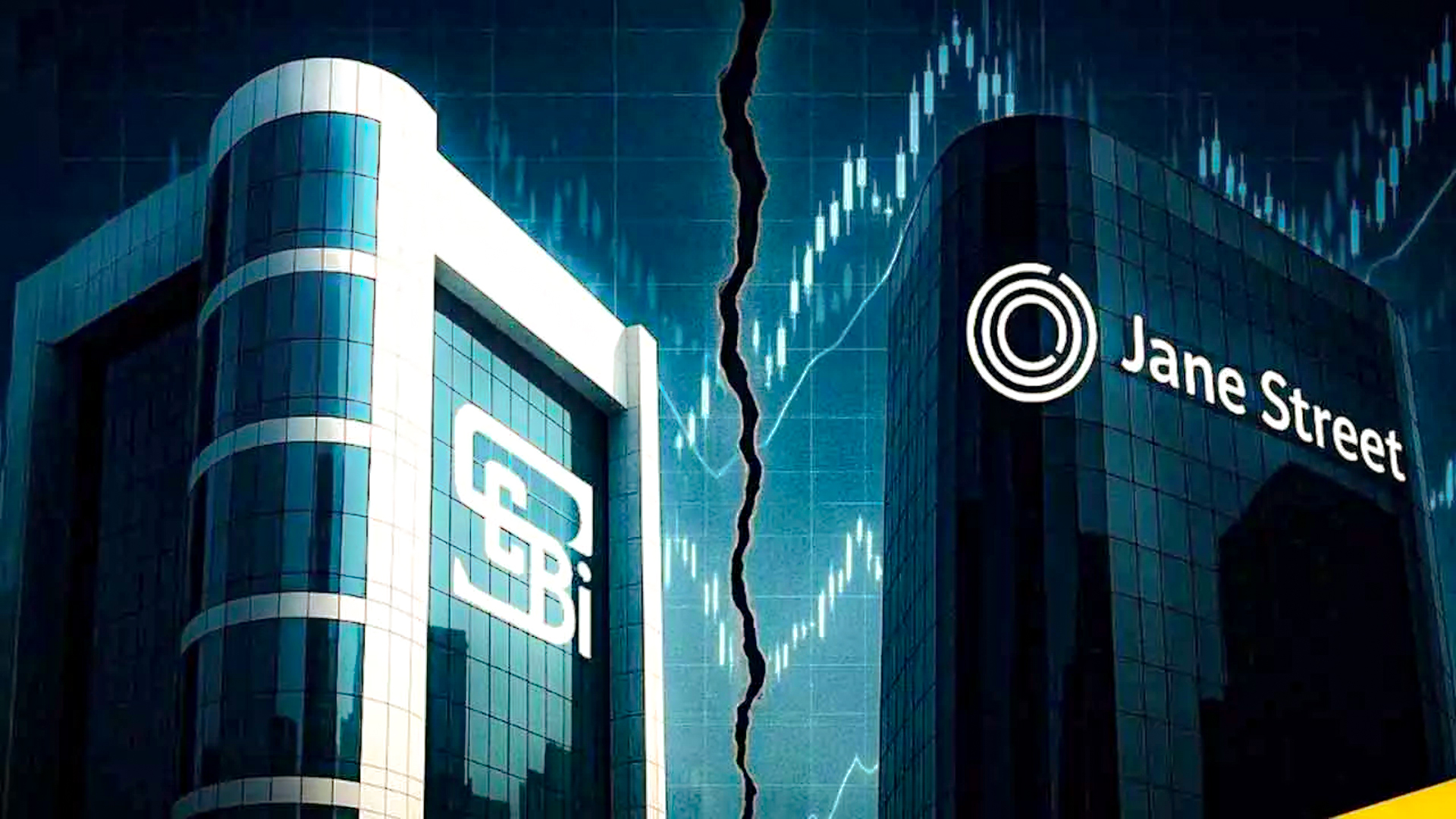
Market Manipulation or Smart Trading? Jane Street's Controversy and Its Impact on Indian Retail Investors
By Dipesh Patni Education Academy
Introduction: A Seismic Shock in FY25
In a dramatic turn of events, Jane Street, a global quantitative trading powerhouse, has been thrust into the spotlight for alleged market manipulation in India’s derivatives market. The Securities and Exchange Board of India (SEBI) has accused the U.S.-based firm of orchestrating trades that destabilized the market, leading to catastrophic losses for retail investors. According to SEBI’s findings, retail traders lost a staggering ?1.05 lakh crore ($12.4 billion) in FY25, while Jane Street allegedly reaped profits of ?36,500 crore ($4.3 billion) through sophisticated trading strategies. This controversy has ignited debates about market fairness, regulatory oversight, and the urgent need for enhanced financial education in India.
The Allegations: What Did Jane Street Do?
SEBI’s 105-page interim order, issued on July 3, 2025, accuses Jane Street of manipulating India’s benchmark indices, particularly the Bank Nifty and Nifty 50, through aggressive trading strategies in the derivatives market. The firm allegedly employed a “pump-and-dump” tactic, involving:
Morning Buying Spree: Jane Street purchased large volumes of Bank Nifty constituent stocks (e.g., HDFC Bank, ICICI Bank, Axis Bank) and futures early in the trading day, artificially inflating index prices.
Afternoon Sell-Off: Later, the firm reversed these positions with aggressive sales, triggering price declines.
Options Profiteering: Concurrently, Jane Street held substantial short positions in index options, profiting from the induced volatility and price swings, particularly on expiry days.
SEBI alleges these actions created a “false or misleading appearance of market activity,” misleading retail traders into unfavorable positions. The regulator has barred Jane Street from trading in Indian securities markets and frozen ?4,843 crore ($566.3 million) in alleged unlawful gains, marking one of the largest disgorgement orders in SEBI’s history.
The Numbers: A Tale of Losses and Gains
The scale of the financial impact is staggering:
Retail Losses: Retail investors lost ?1.05 lakh crore in derivatives trading in FY25, a 41% increase from ?74,812 crore in FY24. The number of individual derivative traders grew from 86.3 lakh to 96 lakh, with average losses per trader rising 27% to ?1,10,069.
Jane Street’s Profits: SEBI estimates Jane Street earned ?36,500 crore from January 2023 to March 2025, with a single-day profit of ?735 crore on January 17, 2024, through its alleged manipulation of the Bank Nifty index.
Market Impact: Over 22% of retail positions were liquidated due to margin calls triggered by sudden market swings, exacerbated by Jane Street’s trades.
India’s derivatives market, the largest globally by trading volume, accounted for nearly 60% of the 7.3 billion equity derivative trades worldwide in April 2025. However, SEBI’s data reveals that 93% of retail traders incur losses in options trading, highlighting their vulnerability to institutional strategies.
Why Retail Traders Bore the Brunt
Retail investors, often lacking the resources of institutional players like Jane Street, were disproportionately affected by these market dynamics. Key reasons include:
Lack of Sophistication: Retail traders typically do not have access to advanced algorithms, high-frequency trading systems, or deep liquidity pools, making them susceptible to rapid market shifts.
Over-Leveraged Positions: Many retail traders engage in highly leveraged options trading, amplifying losses during volatile periods.
Emotional Decision-Making: Panic selling or chasing trends during sharp price movements led to poorly timed trades.
Cascading Margin Calls: Jane Street’s alleged tactics triggered stop-losses and margin calls, forcing retail traders out of positions at significant losses.
SEBI’s report notes that retail traders’ speculative approach, often driven by social media hype and the allure of quick profits, exacerbates their losses. Experts like Nirav Chheda from Nirmal Bang Securities emphasize that retail traders often lack proper trading plans or stop-loss strategies, leading to widened losses.
Dipesh Patni Education Academy’s Perspective
The Jane Street controversy underscores a critical gap in financial literacy among Indian retail investors. At Dipesh Patni Education Academy, we believe that education is the cornerstone of safe and sustainable trading. Key areas of focus include:
Risk Management in Derivatives: Understanding leverage, margin requirements, and stop-loss strategies to mitigate losses.
Decoding Institutional Trading Patterns: Recognizing how large players influence markets and learning to trade defensively.
Avoiding Herd Mentality: Developing disciplined trading strategies to avoid impulsive decisions driven by market noise.
Interpreting Volatility: Using tools like the Volatility Index (VIX) to anticipate and navigate market swings.
Our programs emphasize practical, protective strategies that empower traders to thrive in turbulent markets. Events like the Jane Street controversy are not merely anomalies—they are powerful lessons in the importance of risk management and market awareness.
Regulatory Response and What’s Next
SEBI’s investigation into Jane Street is ongoing, with the regulator expanding its probe to other indices and exchanges. The following measures are under consideration to prevent similar incidents:
Stricter FPI Regulations: Enhanced scrutiny of foreign portfolio investors’ derivatives activities, including position limits and mandatory disclosures.
Improved Surveillance: SEBI is developing mechanisms to monitor intraday positions and audit algorithmic trading programs to detect manipulative patterns.
Retail Protections: Proposals include circuit filters, risk alerts, and stricter margin norms to curb speculative excess and protect retail investors.
Market Reforms: In November 2024, SEBI introduced controls to address volatility on expiry days, such as reduced leverage and enhanced transparency.
Jane Street has contested SEBI’s findings, arguing that its trades were “basic index arbitrage” and compliant with regulations. The firm plans to challenge the ban and engage with SEBI to resolve the issue. However, legal experts suggest that SEBI’s focus on the “intensity and scale” of Jane Street’s trades, combined with their impact on retail investors, strengthens the regulator’s case.
Final Takeaway: Education as the Ultimate Hedge
Whether Jane Street’s actions constitute market manipulation or sophisticated arbitrage, the fallout has exposed the vulnerabilities of India’s retail trading community. The ?1.05 lakh crore loss in FY25 serves as a stark reminder of the risks inherent in derivatives trading, particularly in a market dominated by institutional players with advanced technology and capital.
At Dipesh Patni Education Academy, we advocate for a shift from speculative trading to informed, long-term investing. As our founder, Dipesh Patni, aptly states: “A well-informed trader is a protected trader.” By prioritizing financial education, risk management, and disciplined strategies, retail investors can better navigate the complexities of India’s dynamic markets.
Join our community at Dipesh Patni Education Academy to learn how to trade smarter, not harder. Let’s build a future where retail investors are empowered, not exploited.
Supply & Demand in Technical Analysis: The Smart Way to Trade Like Professionals
Stock Market Ka Confusion Door Kaise Karein? Complete Beginner Guide @ ₹499
How Global Conflicts Impact Stock Market, Forex, Gold, and Crypto – A Financial Education Guide
Smart Money Concepts (SMC) Explained: The Understanding Market Structure and Liquidity
Crypto Learning in India: What You Must Know Before Investing
Warren Buffett at 94: Timeless Investment Lessons for Indian Investors
Marking 1 Year of Excellence in Stock Market Education – Here’s a Silver Gift for You!"
Aditya Infotech IPO 2025: Complete Review, GMP, Lot Size, Dates & Investment Insights
NSDL IPO 2025 Review: GMP, Price Band, Dates, and Should You Invest?
From Zero to Crorepati: The Smart Investor’s Journey with Nivesh Ka Safar
Jane Street Scandal: ?1.05 Lakh Crore Retail Losses and SEBI’s Market Manipulation Allegations
Top 5 Mistakes Beginner Traders Make and How to Avoid Them
Stock Market Mein Success Chahiye? Price Action Trading Seekho!
Why Retail Traders Lose: The Smart Money Strategy That Always Wins
Israel-Iran Conflict 2025: What It Means for Indian Stock Market – Dipesh Patni Explains
How Beginners Can Start Investing in 2025 | A to Z Guide by Dipesh Patni
Whether the stock market is a business or gambling ?
Unlocking the Secrets of Fundamental Analysis: How to Value Stocks Like a Pro?